Crown Close


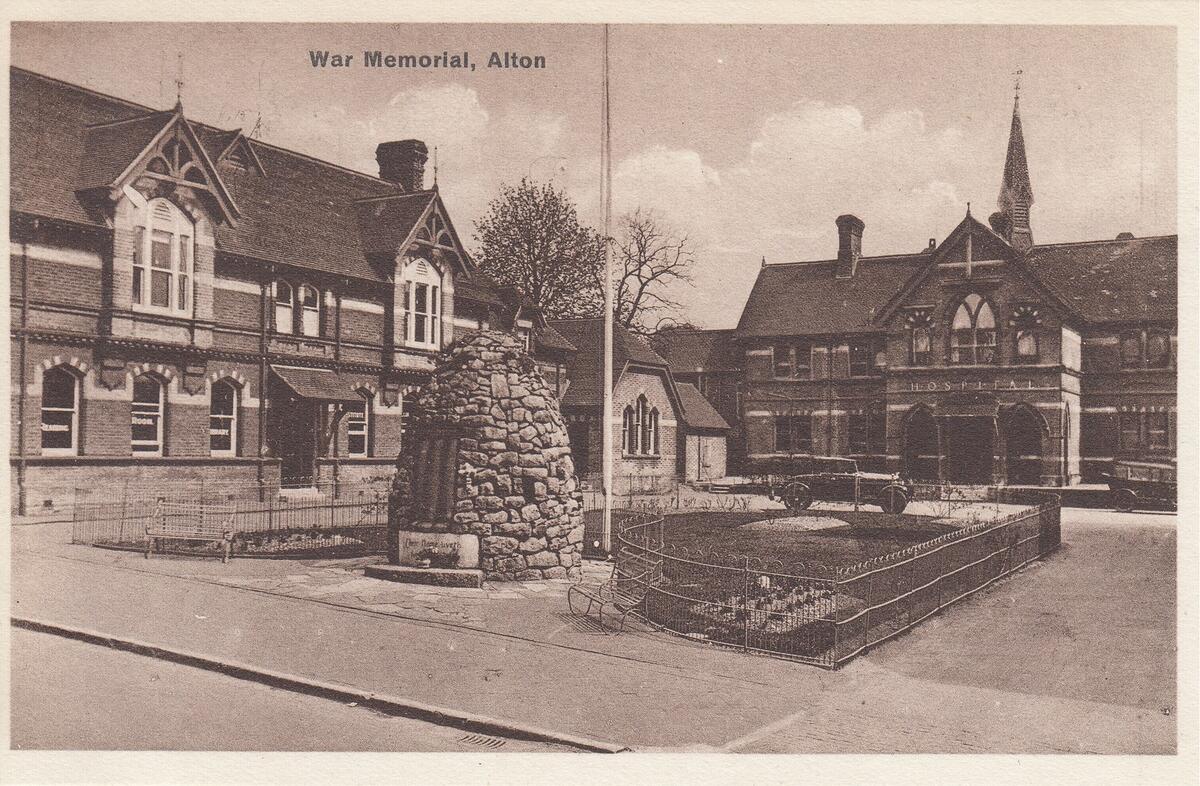

Red Cross Hospital
The Red Cross mobilised their volunteers at the start of the Great War (World War 1) with the aim of providing care and comfort to wounded soldiers, through a chain of auxiliary hospitals and convalescent homes across the country. One such hospital was based at the Assembly Rooms in Alton.
The hospital reported it was ready to receive patients on the 10th August 1914, however its earliest cases were not from the front lines but the Territorials who had been deployed to guard the railway line.
On the 31st October, 50 wounded Belgian Soldiers arrived at Alton Railway Station, it was reported that:
‘A crowd was at the Railway station awaiting the arrival of the men and their blanched and care-worn faces, their ragged uniforms and their utterly dejected appearance made a great impression on all who saw them. Many in the crowd were visibly affected by the sight’
They were transported to the Assembly Rooms, to settle in and begin the process of recovering from their injuries, most of them having wounds in the hands and feet. The Hospital remained in use for the duration of the war, closing in December 1918.


