Queen Alexandra League Treloar Hospital
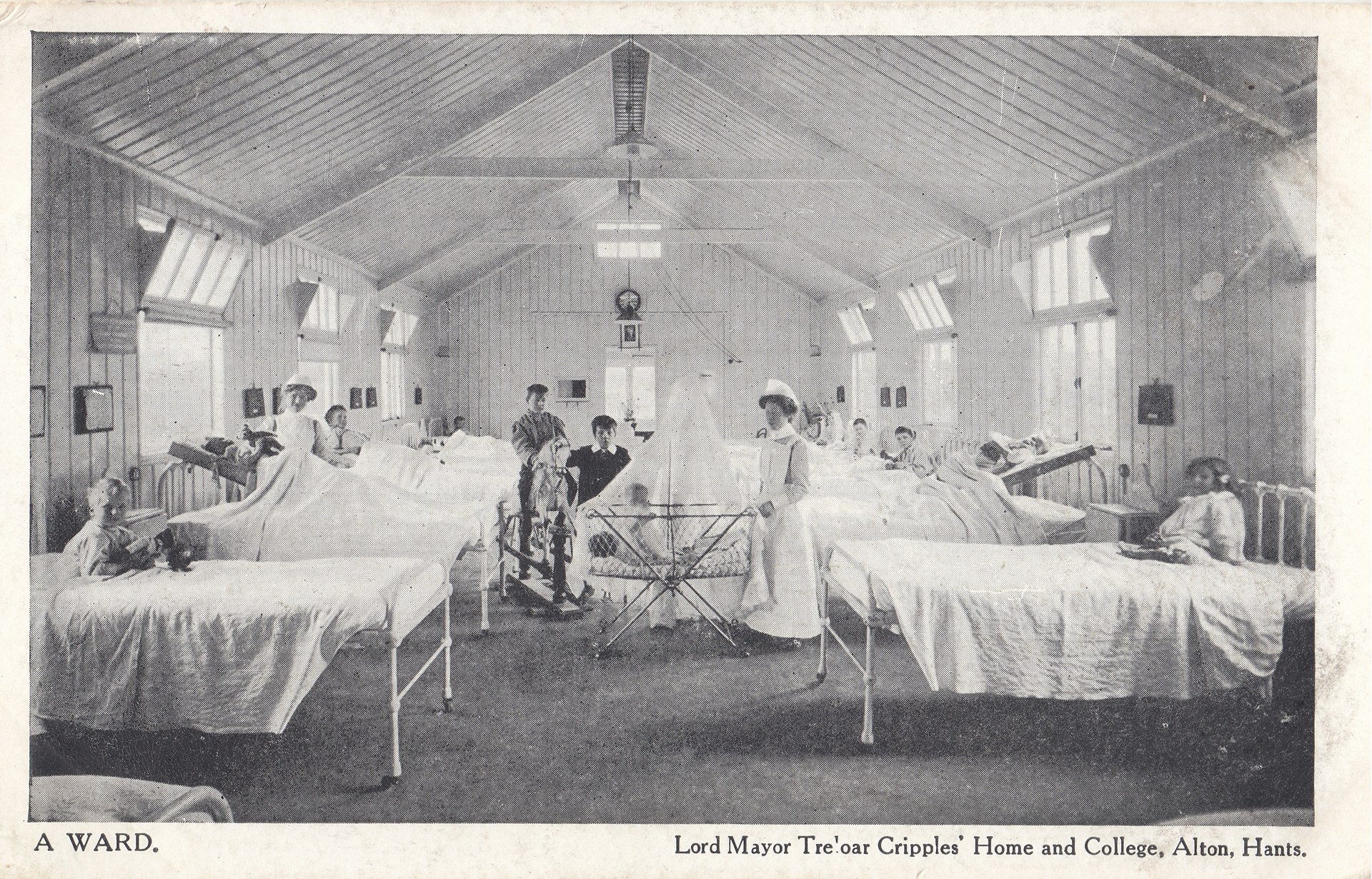
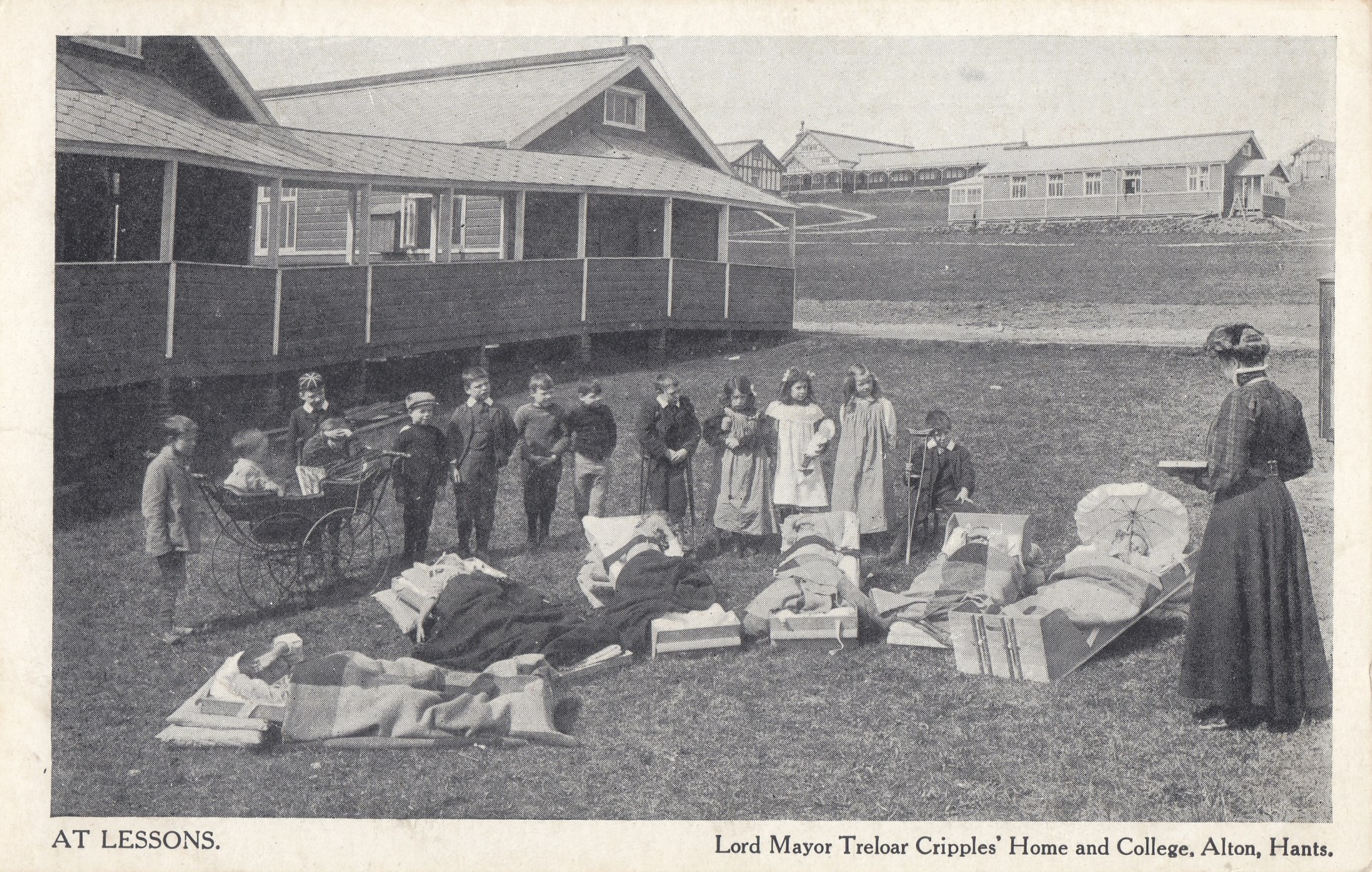
This section contains images from the early days (1908-1912) of Lord Mayor Treloar Cripples Home & College later known as Lord Mayor Treloar Cripples Hospital & College, produced by the Queen Alexandra League.
The Queen Alexandra League of Children to Help Poor Crippled Children, was founded in 1907, with the aim of encouraging people up and down the country to collect or raise funds to support those in need as per the title of the league. Numerous articles announcing the formation of the charity were published in newspapers countrywide during the last week of September 1907, including this one from the Daily Chronicle on the 27th September:
‘This league is to be formed to organise children who are well and also well-placed in life so that their efforts may be directed towards the advantage of the poor crippled children whom Sir William and Lady Treloar desire to provide for. The Crippled Children's Fund, to carry out the beneficent scheme on the realisation of which the Lord Mayor has set his heart, has reached to £50,000. But a further sum of £10,000 is needed, and the new league will devote itself to the task of crowning Sir William's project with complete success. It will be known as the "Queen Alexandra League of Children to Help Poor Crippled Children," with the Queen as president.’
It was not just limited to children, adults were also encouraged to support the League, by running fund raising events or direct donations. Other methods of fundraising included producing postcards of the patients, staff and grounds, that you can see in this section of the website:
Lord Mayor Treloar Cripples Home & College - Series 1
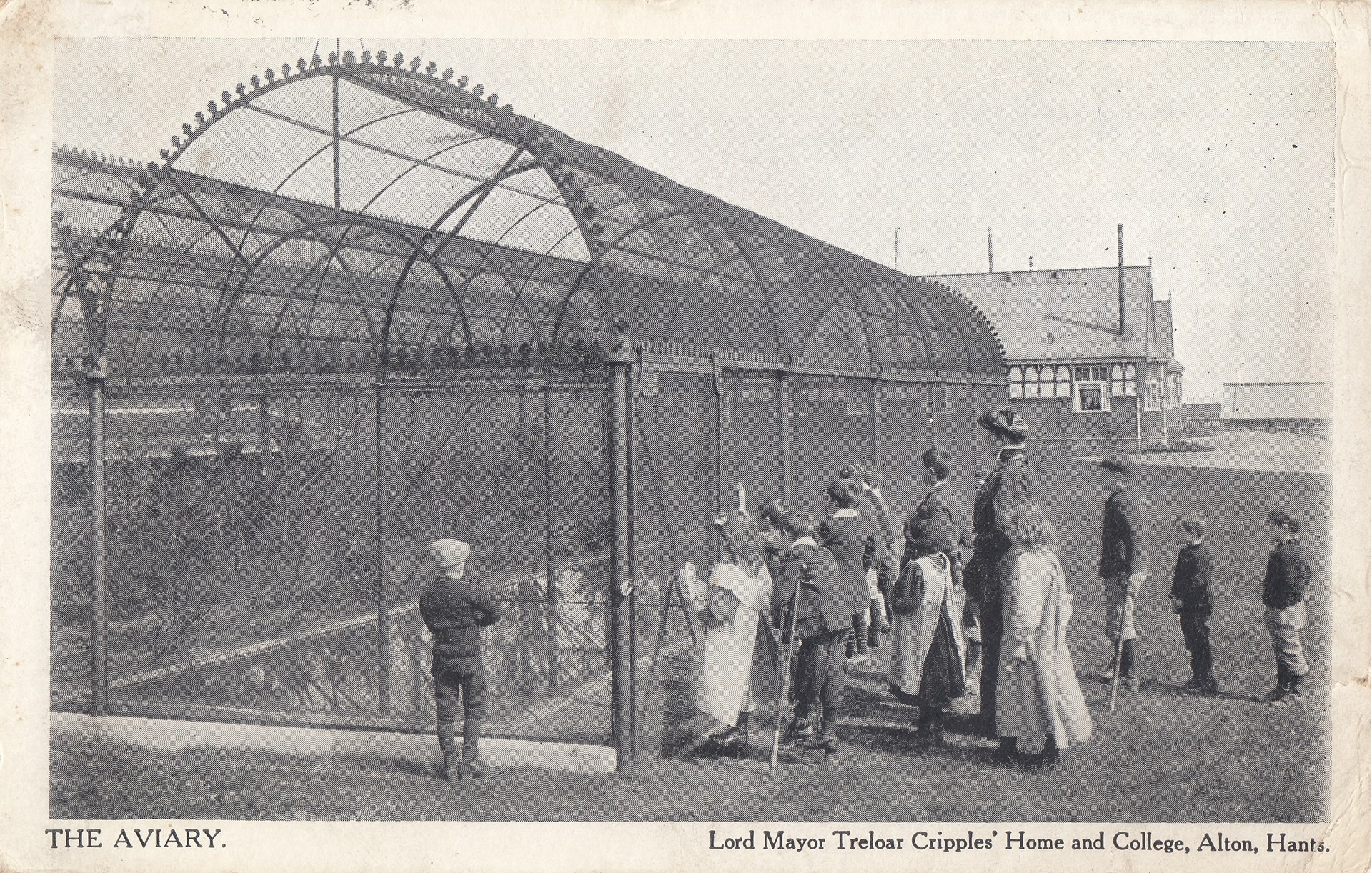
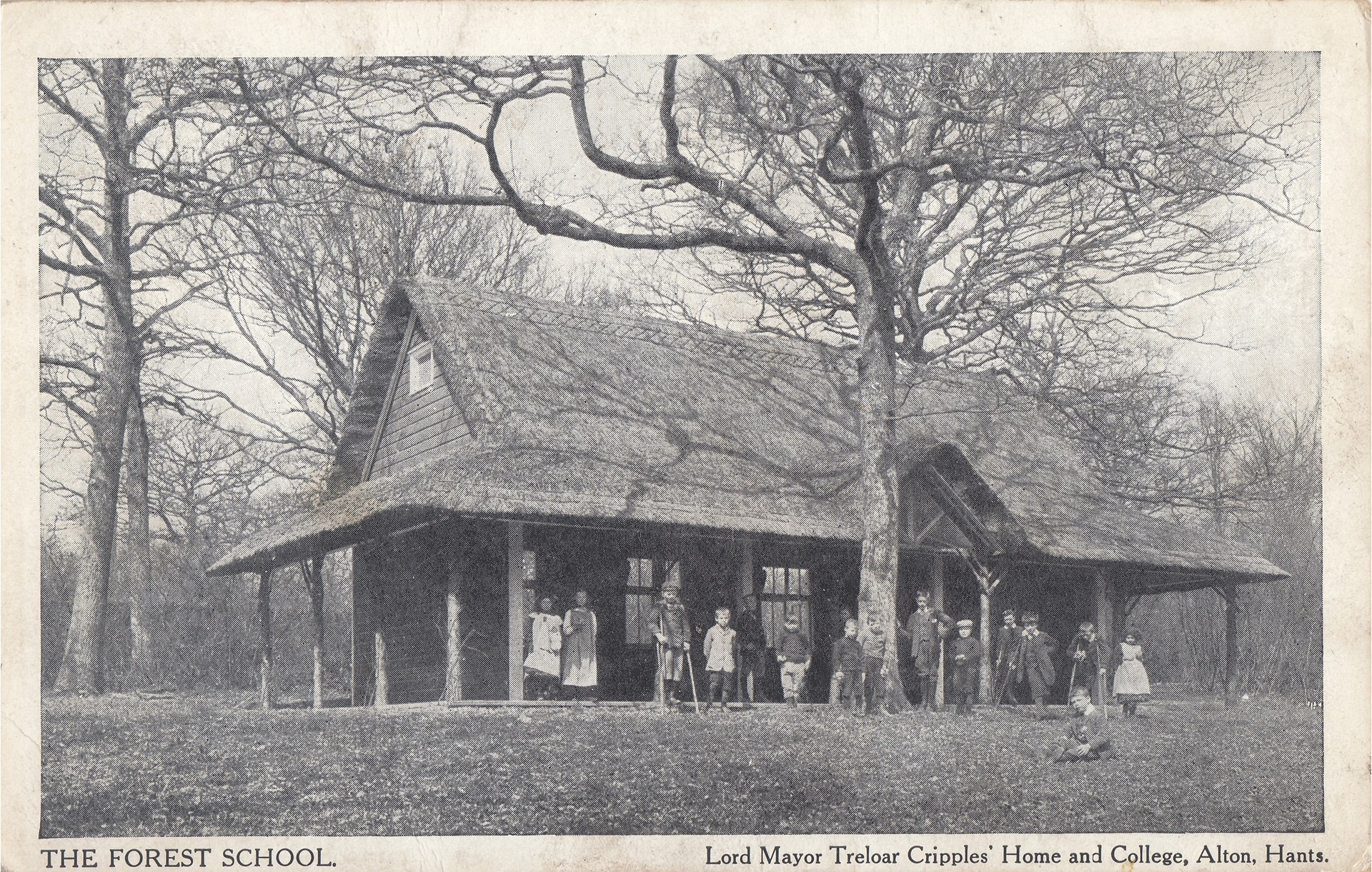
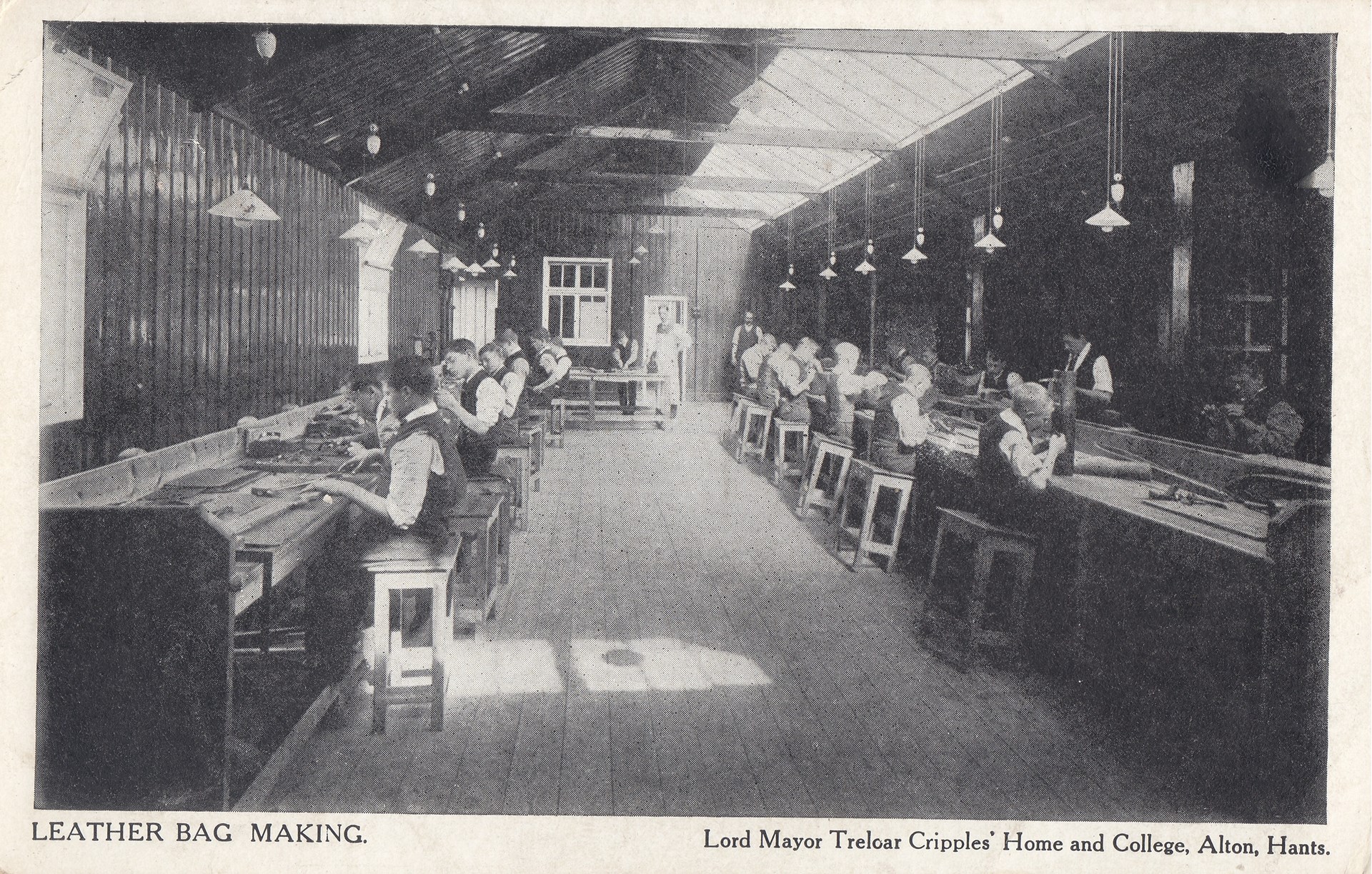
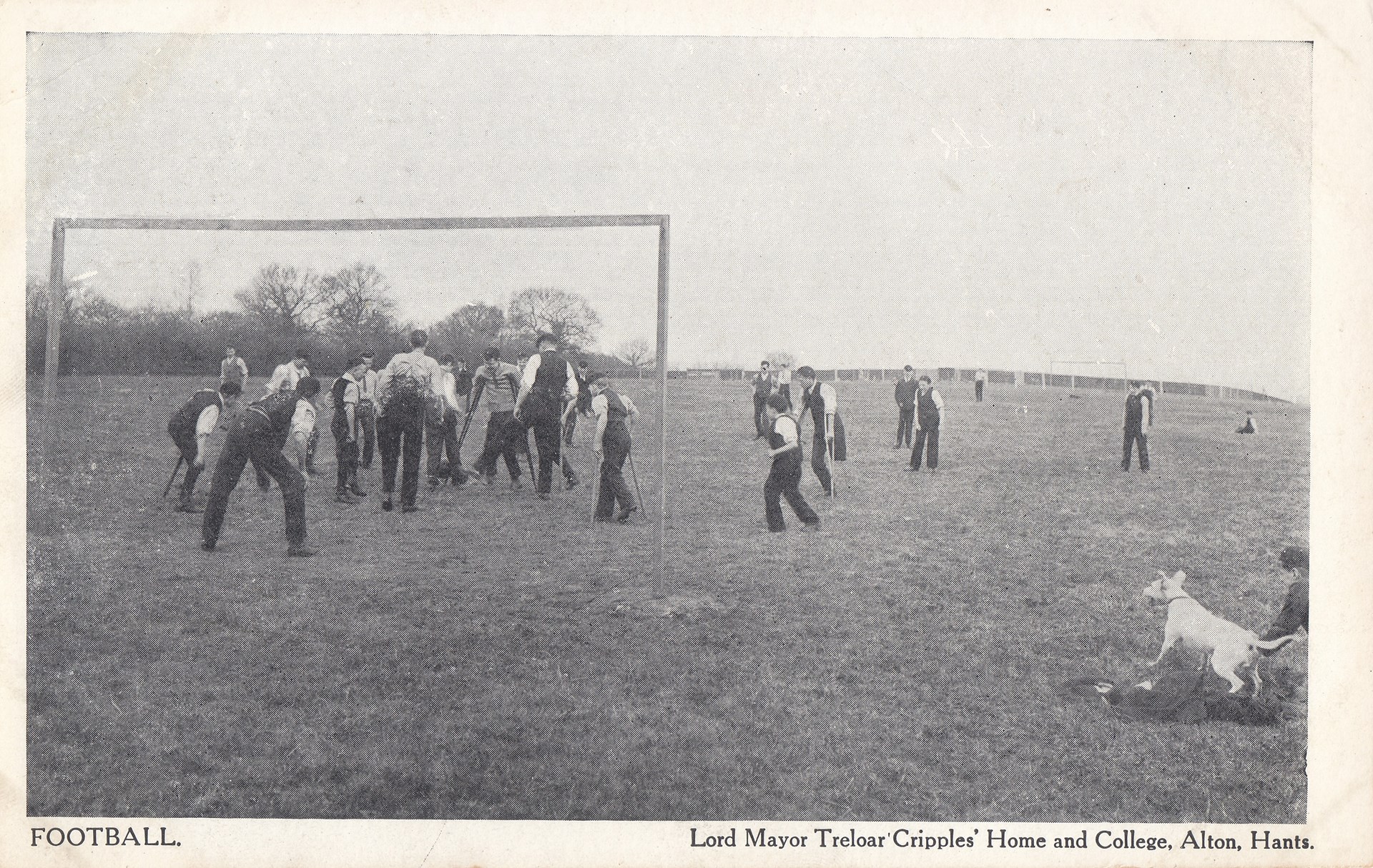
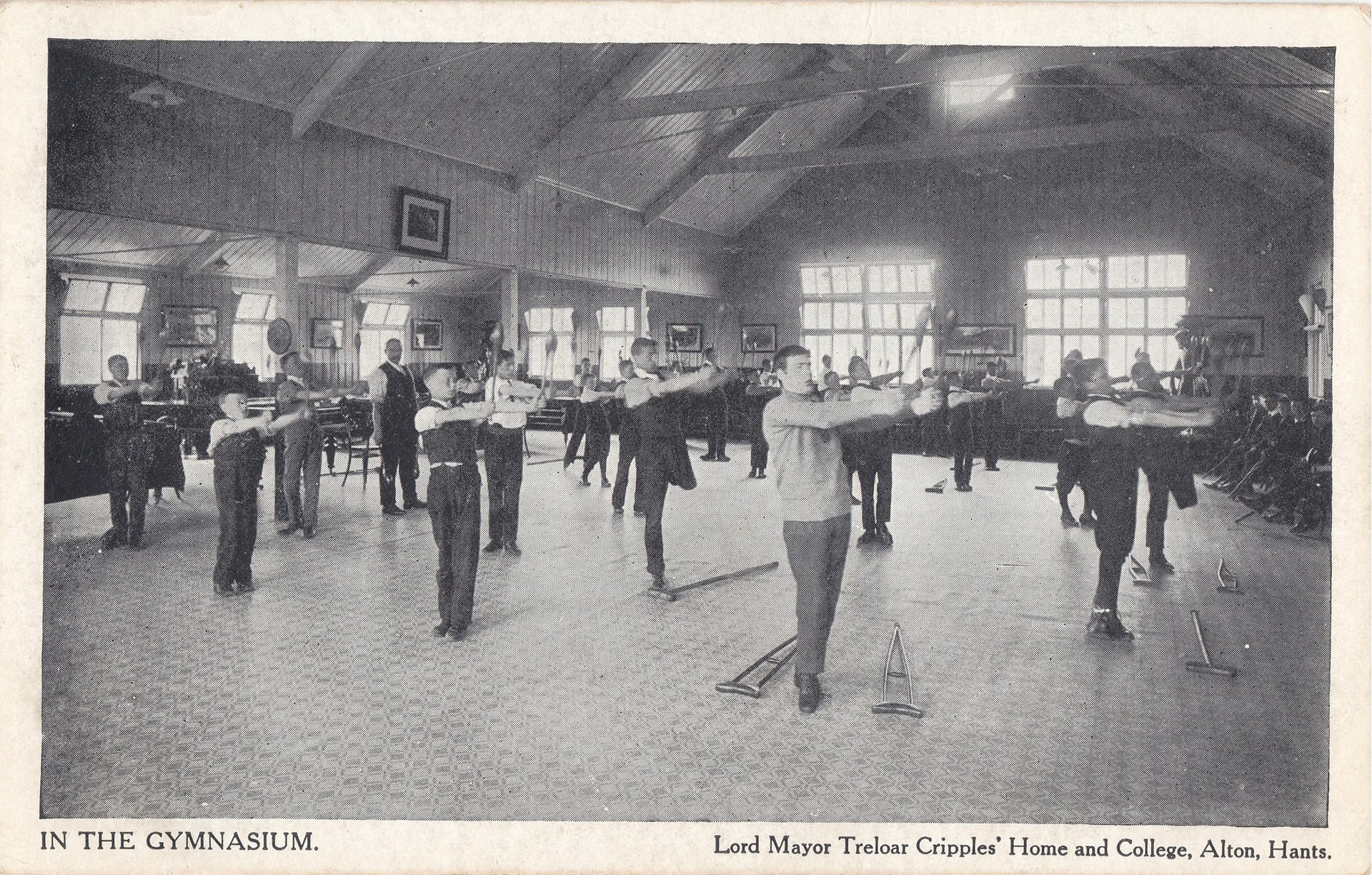
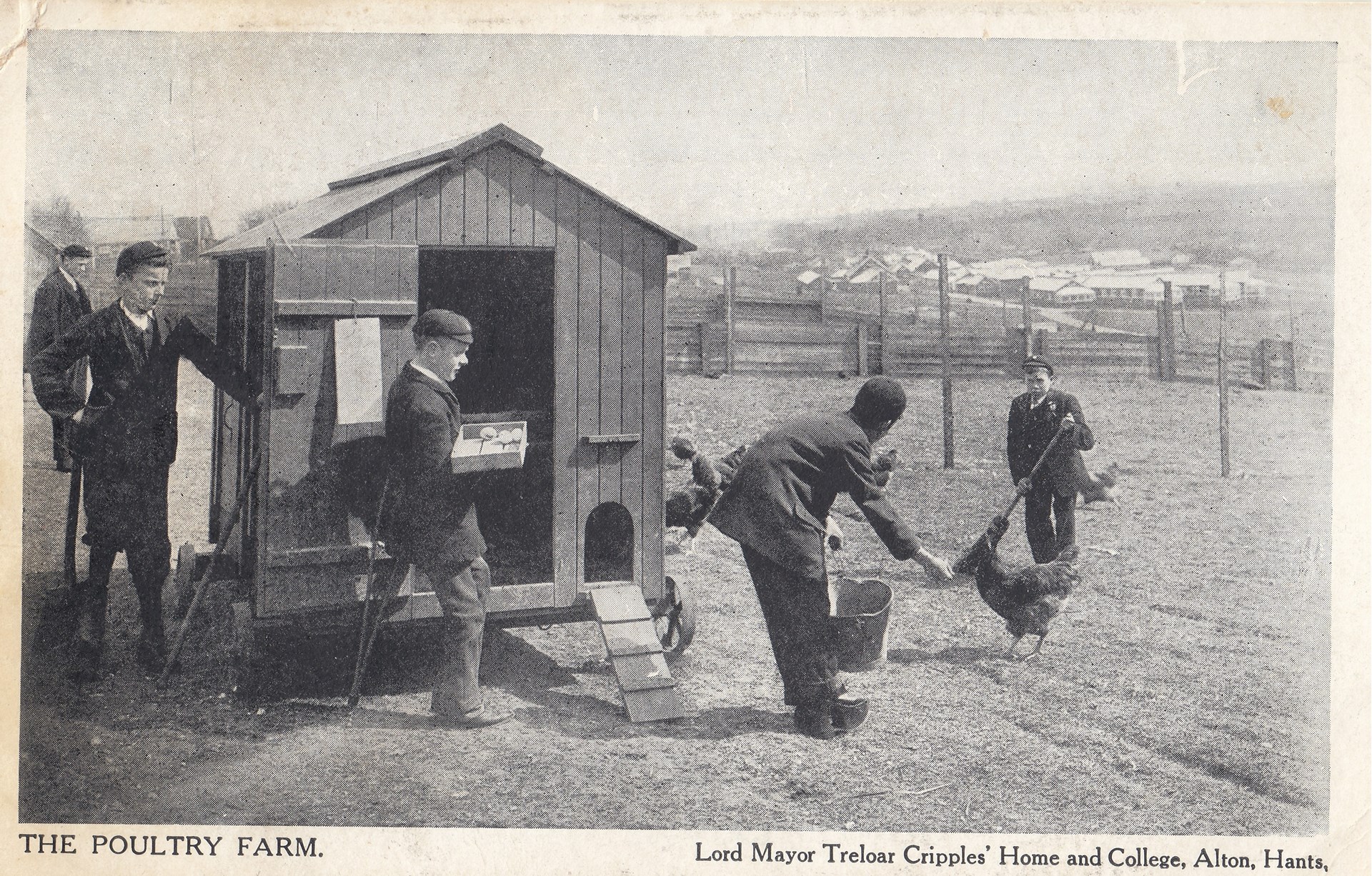
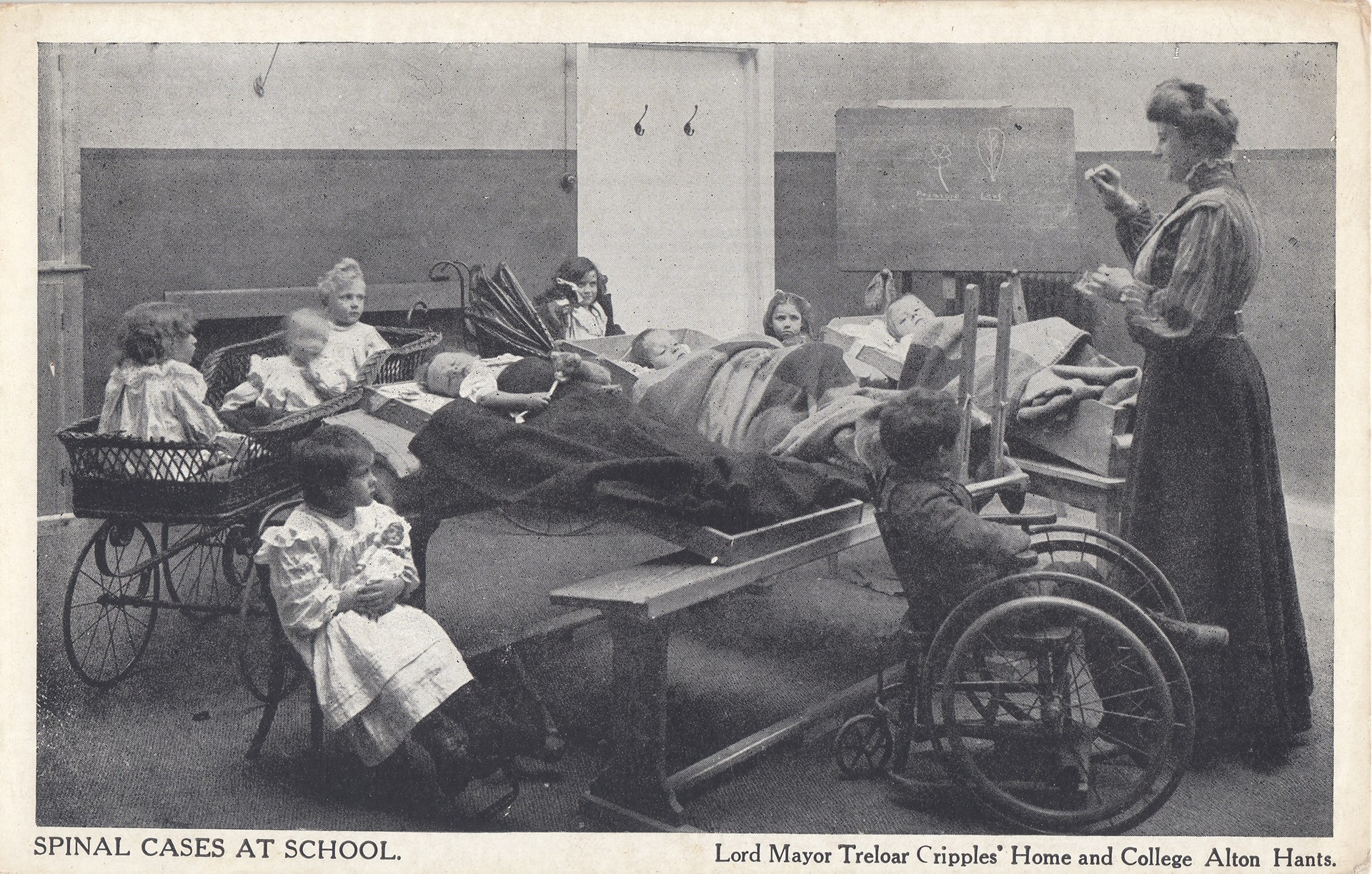
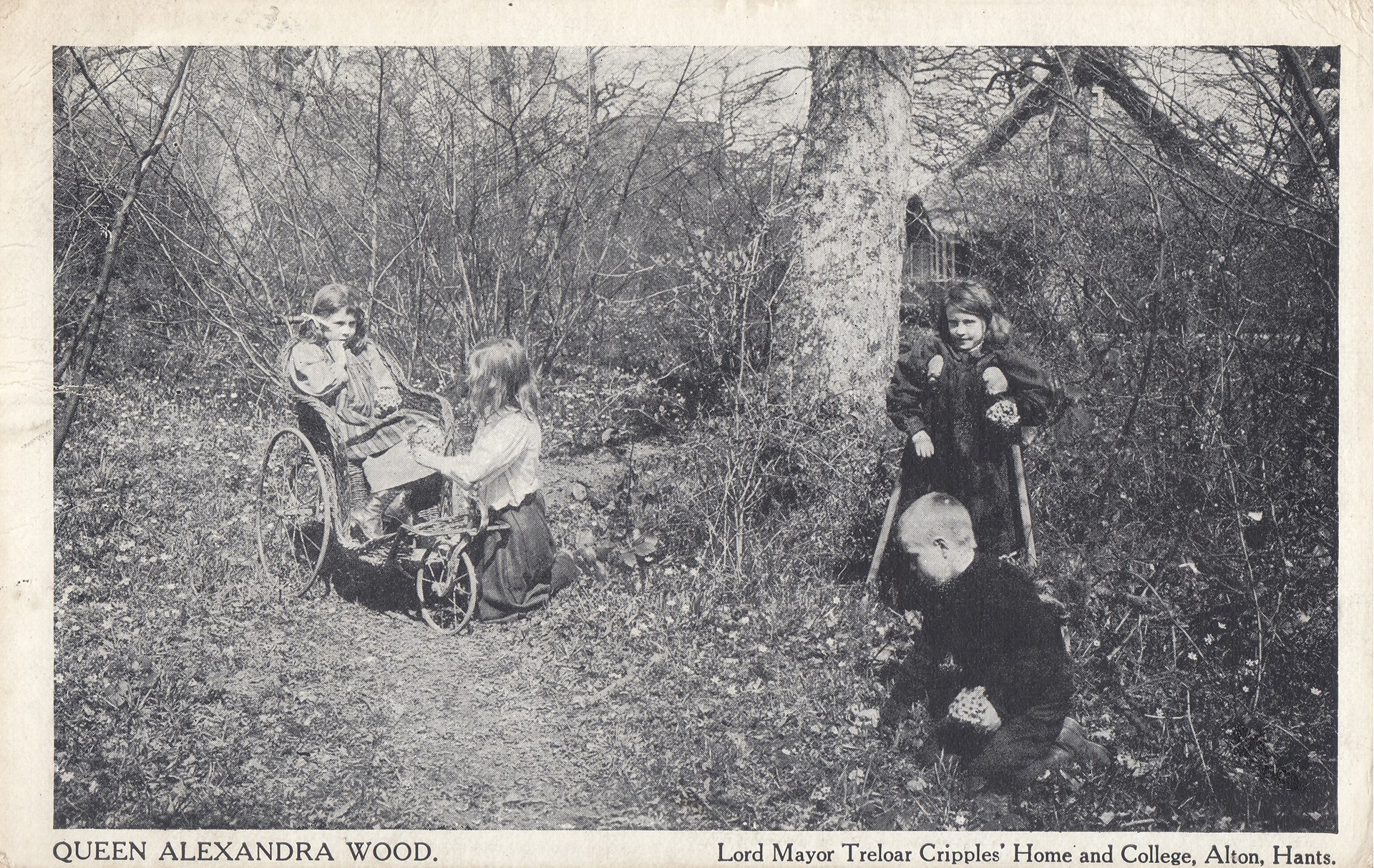
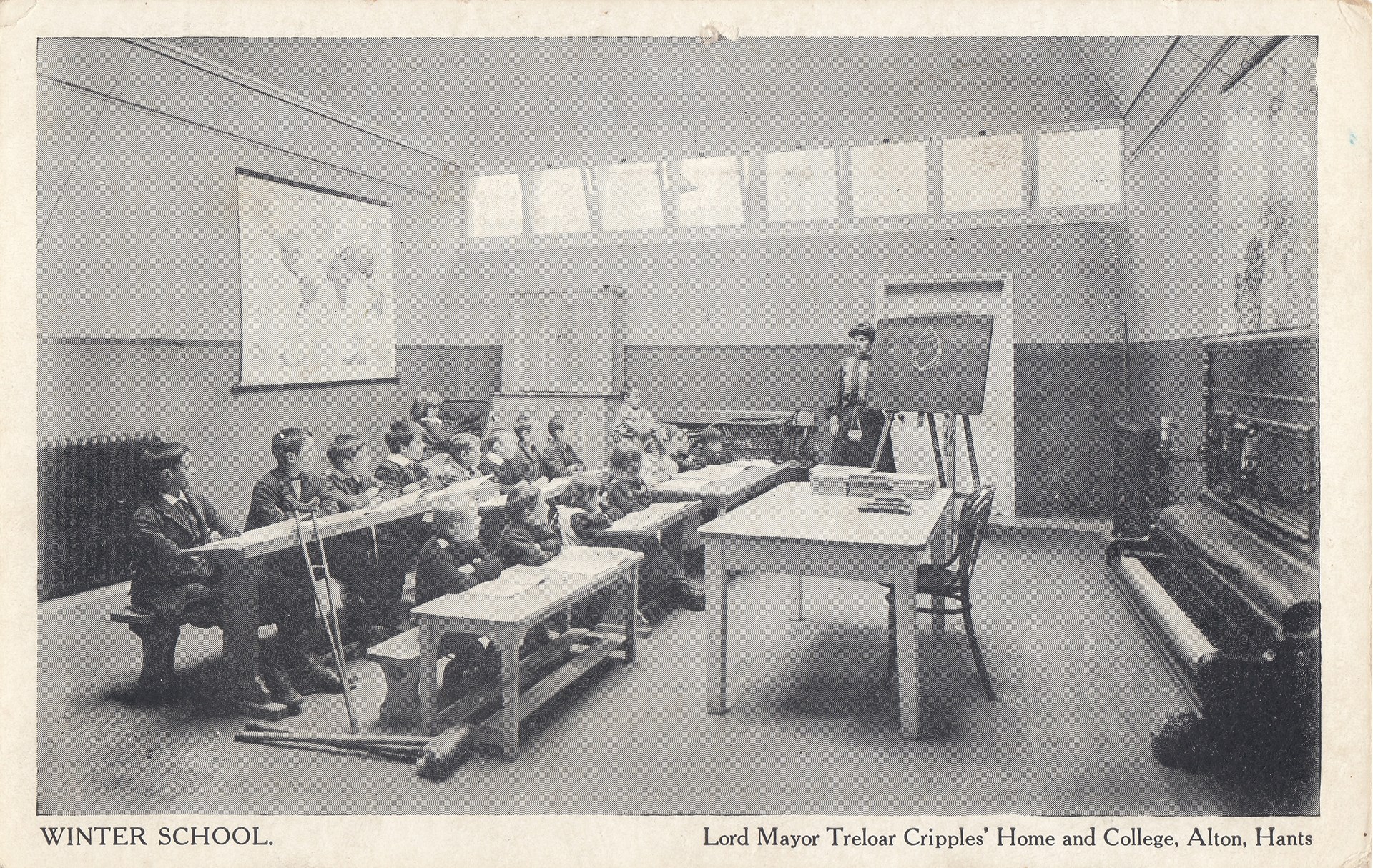
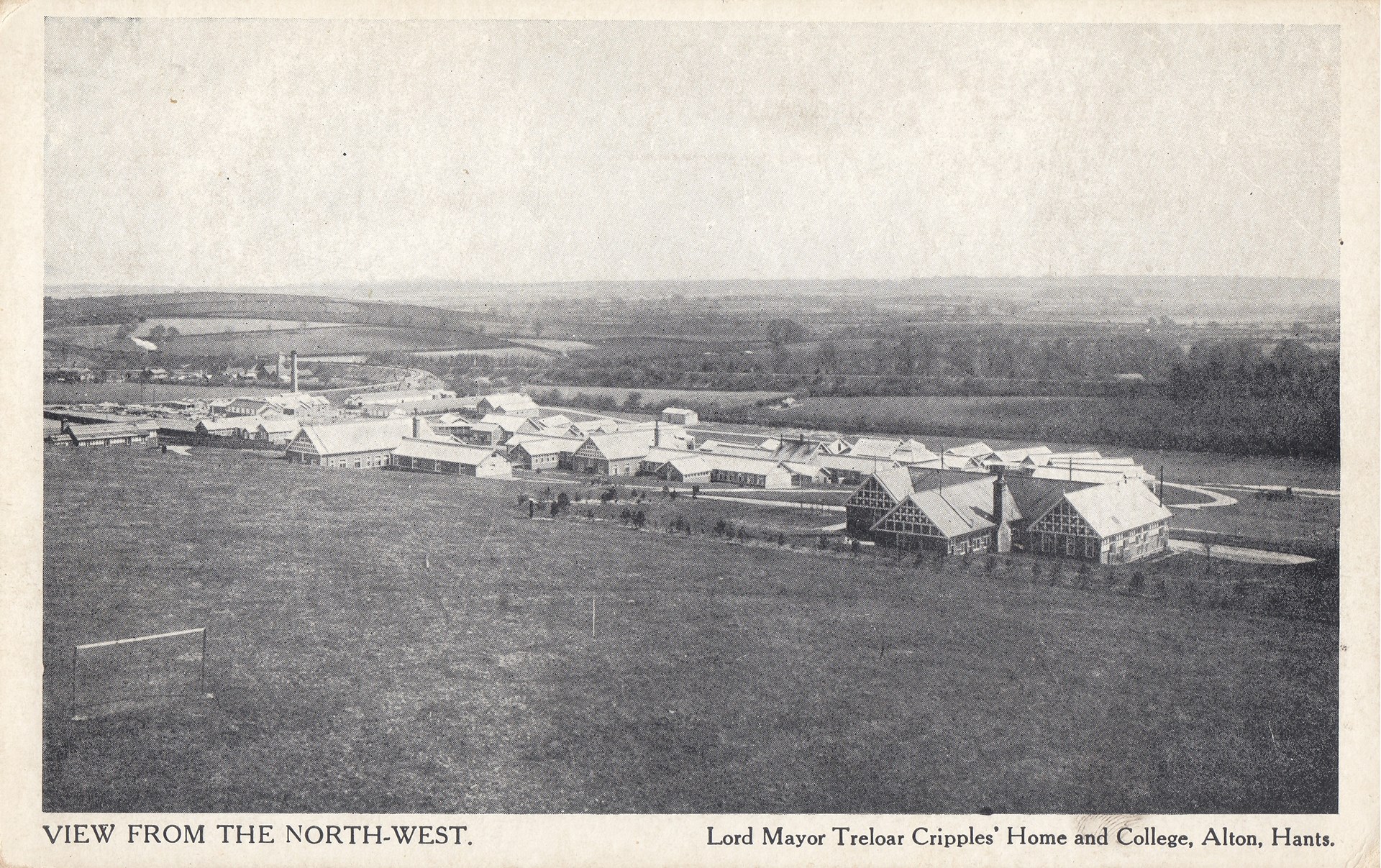
Lord Mayor Treloar Cripples Hospital and College - Series 2
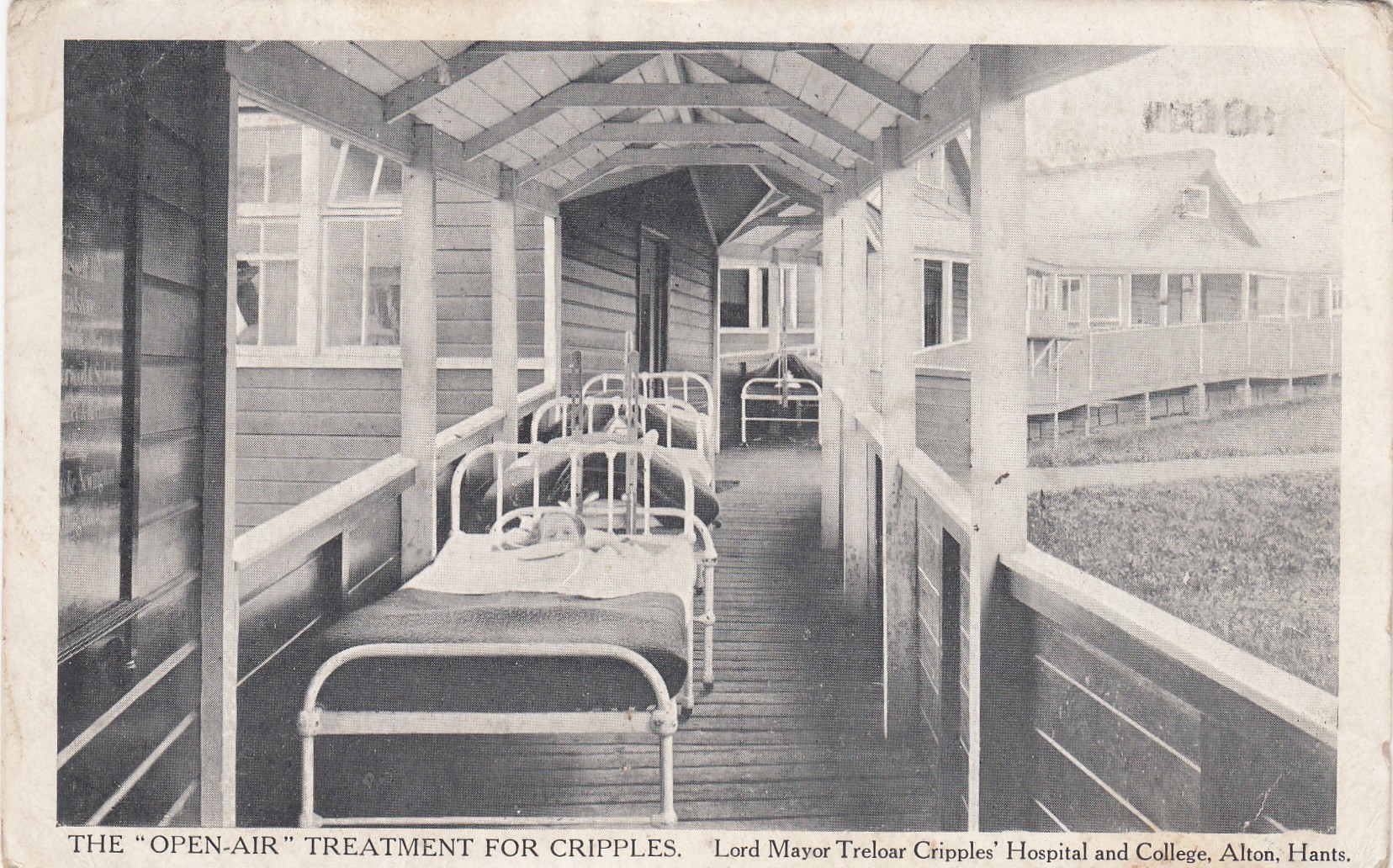
Lord Mayor Treloar Cripples Hospital and College - Series 4
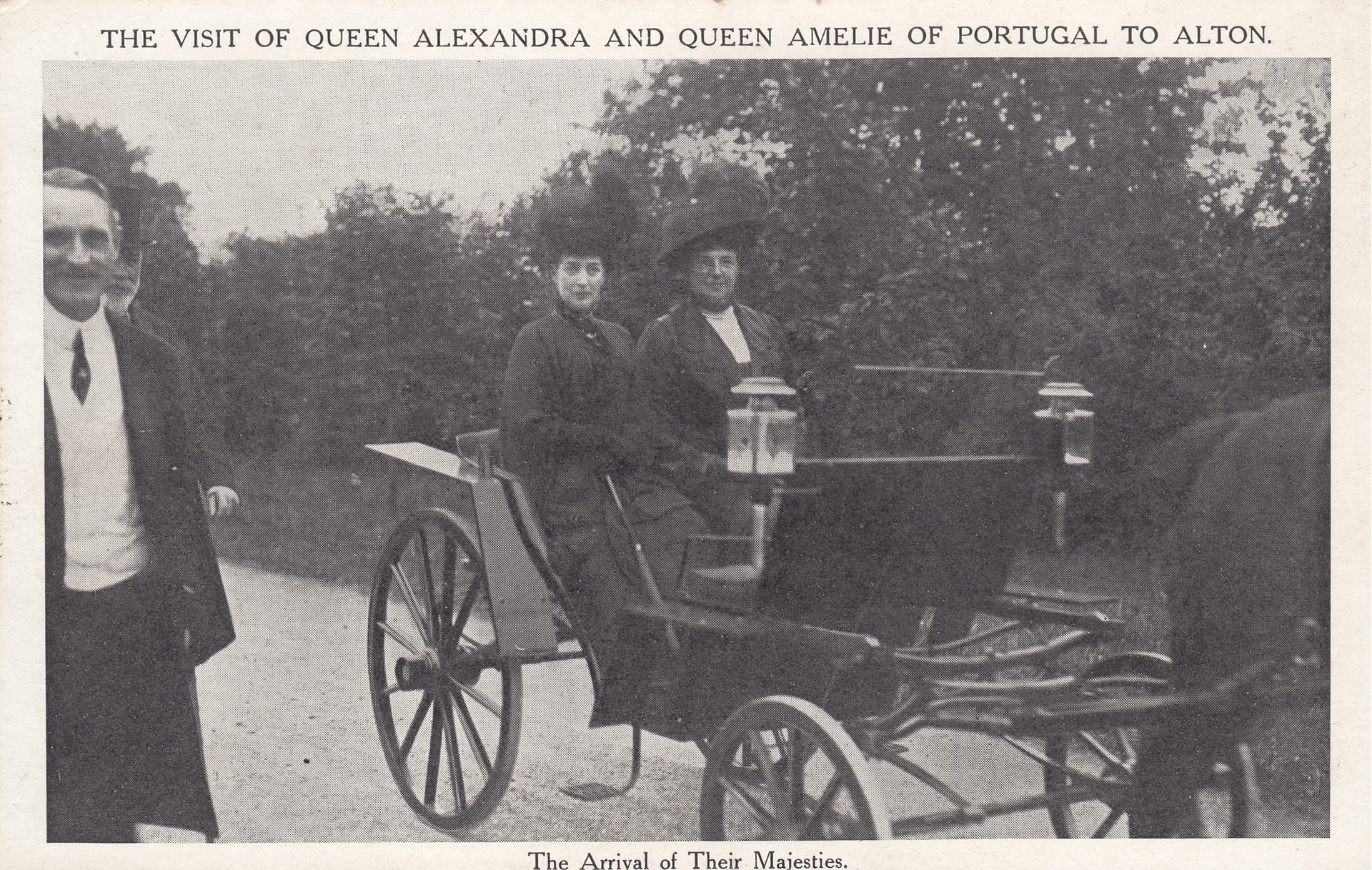
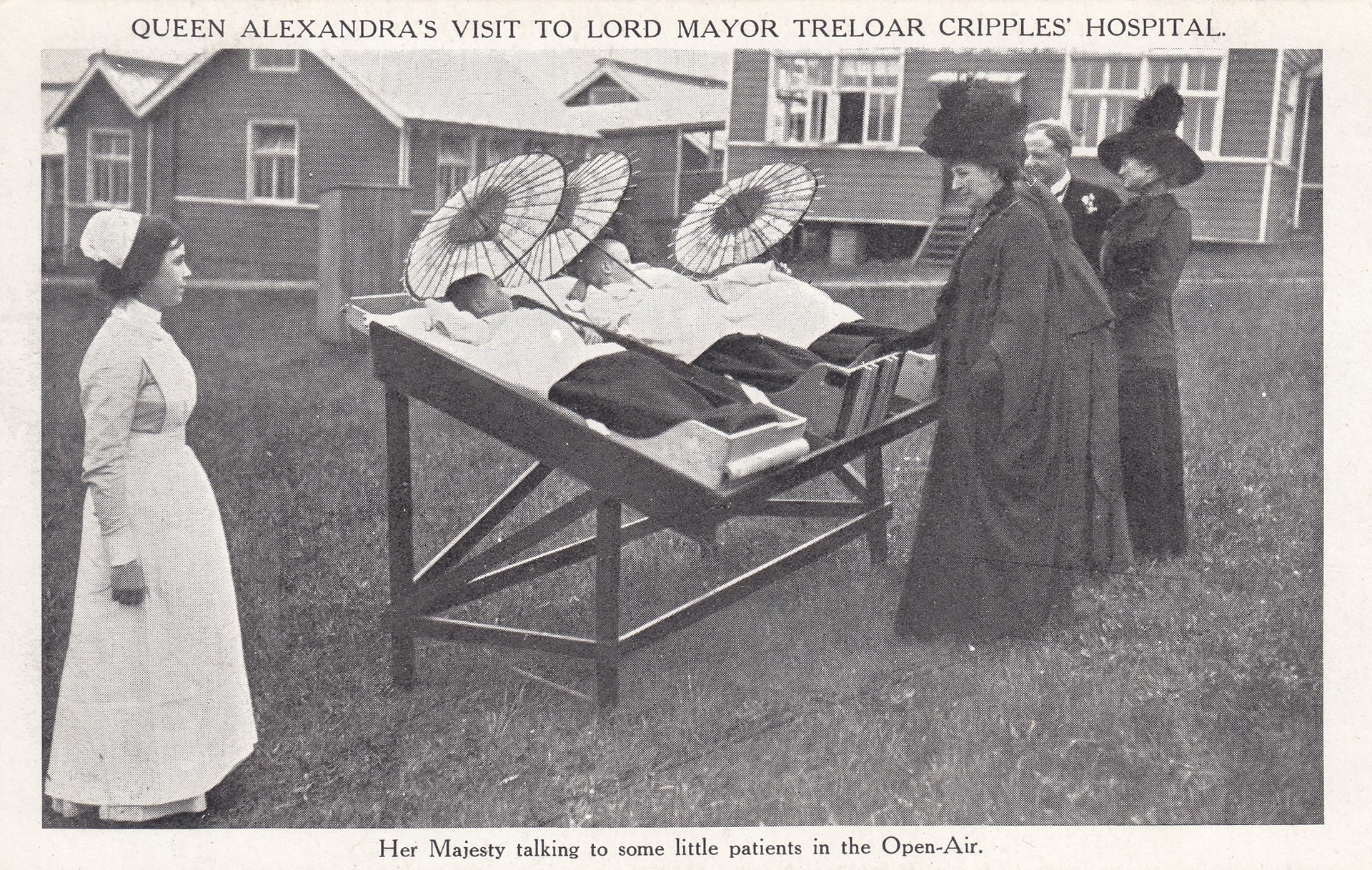
On the 26th July 1912, Queen Alexandra and Queen Amelie of Portugal, paid a private visit to the Lord Mayor Treloar Cripples' Hospital & College, as it was then known.
A train brought them to the Alton Park platform, where they were met by Sir William Treloar, they then proceeded to the college, passing a selection of hutches that had been constructed by some of the students for their pets. At the College they met some of the boys working to make surgical boots for the children in the hospital. It was reported that Queen Alexandra spoke to every boy there, during her tour one of the boys, named Robert Attfield, who had at one time a patient in the hospital, and who was discharged cured and re-admitted into boy's College for technical training presented Queen Alexandra with a lady's blouse case.
From the college, the party made its way to the hospital, stopping in several wards, where Queen Alexandra took time to stop and talk to every child where possible. Including a little girl named Gladys Jory, who occupied the King Edward bed, she was suffering from tuberculosis in the elbow, ankle, and knee joints, and had the honour of presenting Queen Alexandra with a bouquet of carnations and Queen Amelia with a bouquet of sweet peas, which were grown in the grounds.
Towards the end of the visit, Queen Alexandra and Amelia each planted an Oak tree, according to a newspaper report:
'They made a simultaneous movement to secure the spade, and Queen Alexandra, who secured it, used it with a vigour which was surprising. There was no mere formality about it; the Queen worked away till all the roots were well covered and the sapling was held in an upright position. Then Queen Amélie took the spade and planted the second tree'.
This was a relaxed visit, Queen Alexandra taking her time to stop and engage with patients, students and staff alike, she consented to images being taken of her during the visit, some of which in turn were made into the series of postcards below to continue raising funds for the Hospital & College.
Following the death of her husband, King Edward VII, in 1910, Queen Alexandra devoted much of her time to charities, including Alexandra Rose Day, which involved selling silk roses, raising funds for hospitals and people in poverty to access healthcare. The first Alexandra Rose Day took place on the 26th June 1912, a month before this visit. The charity is still raising funds to this day, it has however turned it focus towards food poverty.