Cookies

We use essential cookies to make our site work. We'd also like to set analytics cookies that help us make improvements by measuring how you use the site. These will be set only if you accept.

For more detailed information about the cookies we use, see our cookies page.

Essential Cookies

Essential cookies enable core functionality such as security, network management, and accessibility. For example, the selections you make here about which cookies to accept are stored in a cookie.

You may disable these by changing your browser settings, but this may affect how the website functions.

Analytics Cookies

We'd like to set Google Analytics cookies to help us improve our website by collecting and reporting information on how you use it. The cookies collect information in a way that does not directly identify you.

Third Party Cookies

Third party cookies are ones planted by other websites while using this site. This may occur (for example) where a Twitter or Facebook feed is embedded with a page. Selecting to turn these off will hide such content.

Skip to main content

Fiskerton Mill

Fiskerton Mill, Fiskerton cum Morton

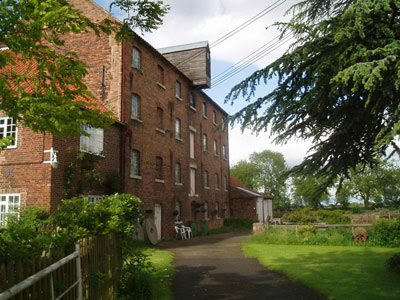
There is still a mill on the Greet today and its location is most likely to have been the Domesday mill site. This mill, however, was built in 1790 as a cotton mill, though by 1837 it was being used as a corn mill, owned by Mr. John Chambers of Tibshelf. Joseph Marriott ran the mill from the mid 1840s and eventually purchased it in 1881, leaving it to his son, William Birch Marriott, who continued to run the mill until 1921. After this time it was used to produce animal feedstuffs and ceased production in the 1980s.
Fiskerton Mill, Fiskerton cum Morton

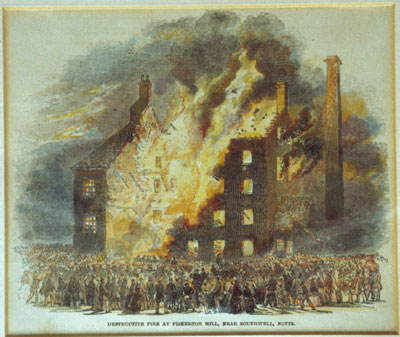
Fire was an ever present threat in a corn mill and Fiskerton Mill suffered three major fires. The date and severity of the first is unknown, but the second was well documented. It occurred on 8 December 1851 and resulted in the death of five men. The mill was largely destroyed, but re-built very much as it had been.  It then suffered another fire in 1856, though reports suggest it was far less damaging than the earlier one in 1851.